
Relieve Musculoskeletal Pain withShockwave Therapy
Living with joint or muscle pain can take a toll on you. Whether it comes from sport, repetitive work movements, or years of wear and tear, lingering pain has a way of slowing everything else in life. Shockwave therapy offers a non-surgical, drug-free option that helps the body do what it is already designed to do: heal.
Shockwave therapy is commonly used for stubborn pain that has not responded well to rest, exercise, or traditional hands-on care alone. It is especially helpful for overuse injuries and chronic tendon problems that tend to linger longer than expected.
What Shockwave Therapy Does
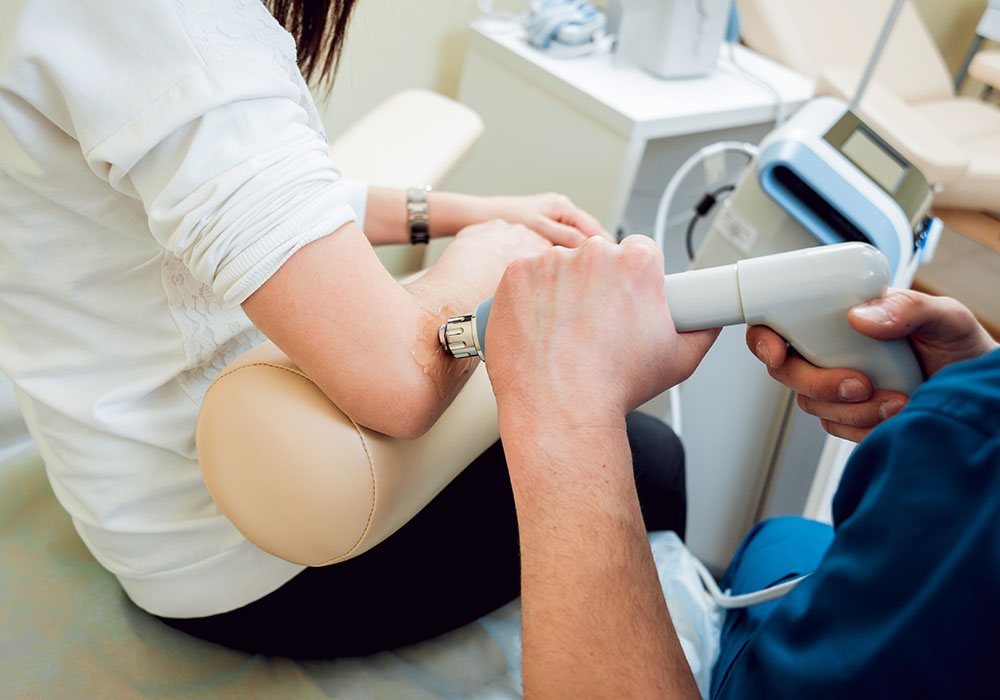
Shockwave therapy uses focused acoustic energy delivered through a handheld device placed directly over the injured tissue. These sound waves travel into the affected area and create a controlled biological response.
Once absorbed by the tissue, the energy encourages increased blood flow, stimulates cellular repair, and triggers the body’s natural healing cascade. This process helps break down unhealthy tissue and supports the regeneration of chronic, tough-to-treat injuries.
Injuries and ConditionsCommonly Treated
Shockwave therapy is frequently used for both athletic and everyday injuries, particularly those caused by repeated stress.
Common conditions include:
- Chronic tendinopathy
- Trigger points
- Plantar fasciitis
- Iliotibial band syndrome
- Shin Splints
- Heel Spurs
- Tennis Elbow
These conditions often persist and become chronic. Shockwave therapy can help restart that process and lead to lasting relief.
Who Should Not Receive Shockwave Therapy
Most people tolerate shockwave therapy very well, and it is considered a safe treatment when used appropriately. That said, it may not be suitable if you:
- Are pregnant
- Have a bleeding or clotting condition
- Have bone cancer
- Have an active infection near the injury
- Have metal hardware in the area being treated
- Received a steroid injection within the last three months
- Recently used anti-inflammatory medications such as ibuprofen
What a Typical Session Feels Like
Shockwave therapy sessions are quick and straightforward. You can stay fully clothed except for the area being treated. A conductive gel is applied to the skin, and the handheld device is placed over the injured tissue. During treatment, you may feel pressure or brief discomfort, especially over sensitive areas.
This sensation usually decreases as the tissue responds. Each session lasts only a few minutes, and most people resume normal daily activities immediately afterward. High-impact exercise should be avoided for a short period following treatment.
Many patients notice improvement after a few sessions, with optimal results typically achieved within three to six visits.
Shockwave Therapy at ActiveEdge Spine & Sport
We use Shockwave Therapy as part of a comprehensive approach to injury recovery and performance care. Every patient begins with a thorough assessment to identify the underlying cause of pain. From there, a personalized treatment plan is created that may include shockwave therapy, chiropractic care, and rehabilitation exercises.
If joint or muscle pain is holding you back, shockwave therapy may be a powerful tool to help you get moving again. Contact Active Edge Spine & Sport to schedule a consultation and determine whether this treatment is right for you.